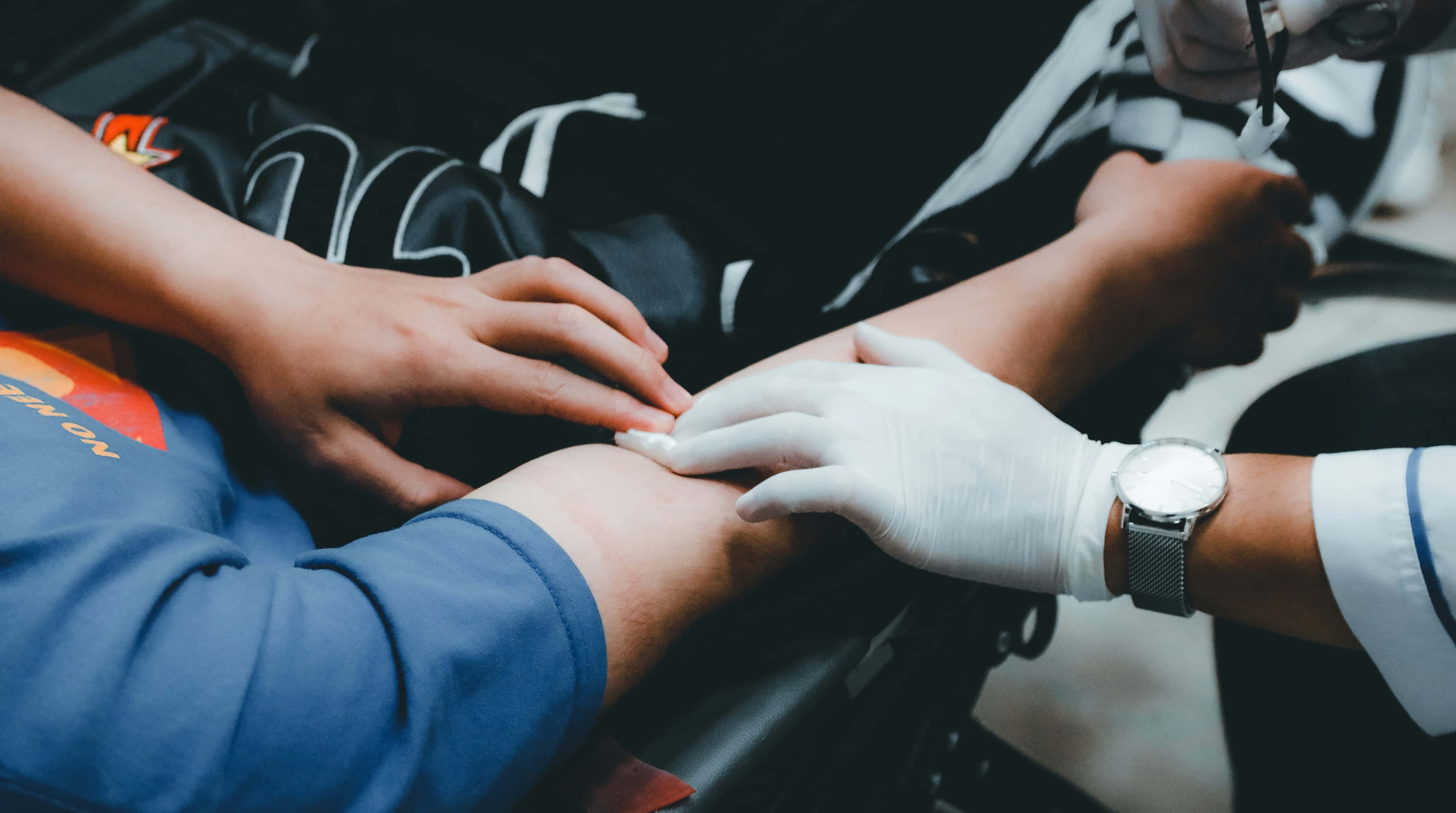
Only some blood tests need you to fast. The NHS says whoever arranges your test should tell you if yours is one of them. One that does is a fasting glucose test, which needs at least 8 hours with nothing to eat or drink except water. For anything else, including cholesterol, follow the instructions for your own test, because labs don't all ask for the same thing.
Which blood tests need fasting?
A fasting glucose test does, and a few other tests care about food or timing in their own way.
A fasting glucose test does. Glucose is the sugar in your blood, and this test needs at least 8 hours beforehand with nothing to eat or drink except water.
Other blood sugar tests don't. The haemoglobin A1c (HbA1c) test measures your average blood sugar over the last 2 to 3 months. The NHS says you can eat and drink as normal before it. A random glucose test can be taken at any time of day.
Food can still matter without a full fast. Estimated glomerular filtration rate (eGFR) is a kidney test. NICE advises adults not to eat any meat in the 12 hours before it.
Is fasting needed for cholesterol?
Usually not, but some labs still ask for a fasting sample, so check what yours says.
The NHS says most people don't need to fast before a cholesterol test, though you might be asked not to eat for up to 12 hours. NICE says a fasting sample isn't required for a full lipid profile. That's the standard cholesterol test, which includes triglycerides, a type of fat in the blood.
A 2016 European expert consensus drew on studies that included 92,285 Danish adults. It found a normal meal raised triglycerides by about 0.3 mmol/L at most, on average. HDL cholesterol wasn't affected by eating. The experts recommend routine cholesterol tests without fasting. They say a fasting test may be considered when triglycerides come back above 5 mmol/L without one.
Even so, some NHS labs still ask for a longer fast when a fasting cholesterol test is requested. One trust's leaflet gives 12 to 14 hours, and says the time differs from test to test. So if your instructions say to fast, do.
What a new study found
A large 2026 study from South Korea points the same way as current guidance.
A 2026 study looked back at more than 9.7 million blood test results. They came from 101,148 adult outpatients at one hospital in South Korea. Most routine tests were barely affected by how long people had fasted. When it compared the same people across visits, the clear effects were limited to a few tests. Glucose and triglycerides were among them, both higher when people had eaten in the last 8 hours.
Glucose fell steadily for about 4 hours after eating, then levelled off. The authors say a fast of 8 hours or more is still needed for an accurate fasting glucose test. Fasting beyond 12 hours gave no measurable advantage for any test.
It was an observational study from one hospital, in adults with a median age of 61. Its results fit what NICE and the 2016 consensus already say, so it broadly supports current advice rather than changing it. It doesn't replace your own test's instructions.
When should you test testosterone?
In the morning, between 7am and 11am, ideally before you've eaten.
In the morning. Testosterone is highest in the early morning. Guidance on men's testosterone from the British Society for Sexual Medicine says to measure it between 7am and 11am, ideally fasting. In healthy volunteers, fasting levels were up to 30% higher than levels after eating. The guidance takes a practical view, though, and doesn't insist on a fasting sample.
Iron is another one to watch. Blood iron swings widely through the day and from one day to the next. Our Advanced Essential Blood Test page says a morning sample is best for iron.
What counts as fasting?
Nothing to eat or drink except water, and keep taking prescribed medicines unless you're told otherwise.
Fasting means nothing to eat or drink except water, so water is fine. The NHS pathology service for Hull, York and Scarborough says a fasting test may mean up to 12 hours with nothing but water.
Some hospitals spell it out further. One NHS trust asks people having a fasting test to drink only water that morning. That means no tea, coffee (even black), fizzy or sugar free drinks, chewing gum or smoking.
Medicines are a separate question. The NHS says you may be asked to stop certain medicines before some tests, such as ones that help prevent blood clots. If you're unsure, the Hull, York and Scarborough service says keep taking a medicine as prescribed until you've checked with your doctor. Your doctor may be able to take it into account when reading your result. Supplements, vitamins and herbal remedies can affect results too, so tell your doctor if you take them.
If you have diabetes, speak to your doctor before fasting for any blood test.
Follow your own test's instructions
Tests ask for different things, even within one range, so your own test's instructions are the guide.
Your best guide is the instructions for your own test, and our range shows why. Our Advanced Heart Health Profile and Advanced Essential Blood Test both say you don't need to fast. The Advanced Well Man Blood Test includes testosterone. It asks for a morning sample between 7am and 11am, before you eat.
Some of our tests also ask you to stop biotin for 48 hours beforehand. Biotin is vitamin B7, often found in hair, skin and nail supplements.
Forgot to fast, or had breakfast before a morning test? Check your test's instructions and tell the person taking your sample.
Every result is checked by our team before it's released.
Related test
Advanced Well Man Blood Test
An advanced well man blood test covering heart, liver, kidney, thyroid, blood sugar, iron, vitamins and testosterone. It suits men wanting a thorough yearly…
Common questions
Quick answers to what people ask most about preparing for a blood test.
Can I drink water before a blood test?
Yes. Fasting means nothing to eat or drink except water, so water is fine, even before a fasting test.
How long do you need to fast before a blood test?
It depends on the test, so follow your instructions. A fasting glucose test needs at least 8 hours. Some fasting tests may need up to 12 hours.
Do I need to fast for a cholesterol test?
Most people don't, says the NHS, and NICE doesn't require a fasting sample. Some labs still ask for one, so follow your instructions.
Should I take my medication before a blood test?
If you're unsure, keep taking it as prescribed until you've checked with your doctor. Tell your doctor about any vitamins or supplements too.
Do I need to fast for a testosterone test?
UK guidance for men says to measure testosterone between 7am and 11am, ideally fasting. Levels are highest in the early morning.
Was this article helpful?
Know where you stand
Home finger-prick kits, nurse visits and clinic appointments, with your results explained.
Browse all tests
Daniel SnowWritten by · BSc (Hons), PGCE
This article is for general information only and is not medical advice. If you have symptoms or concerns, speak with a qualified clinician.