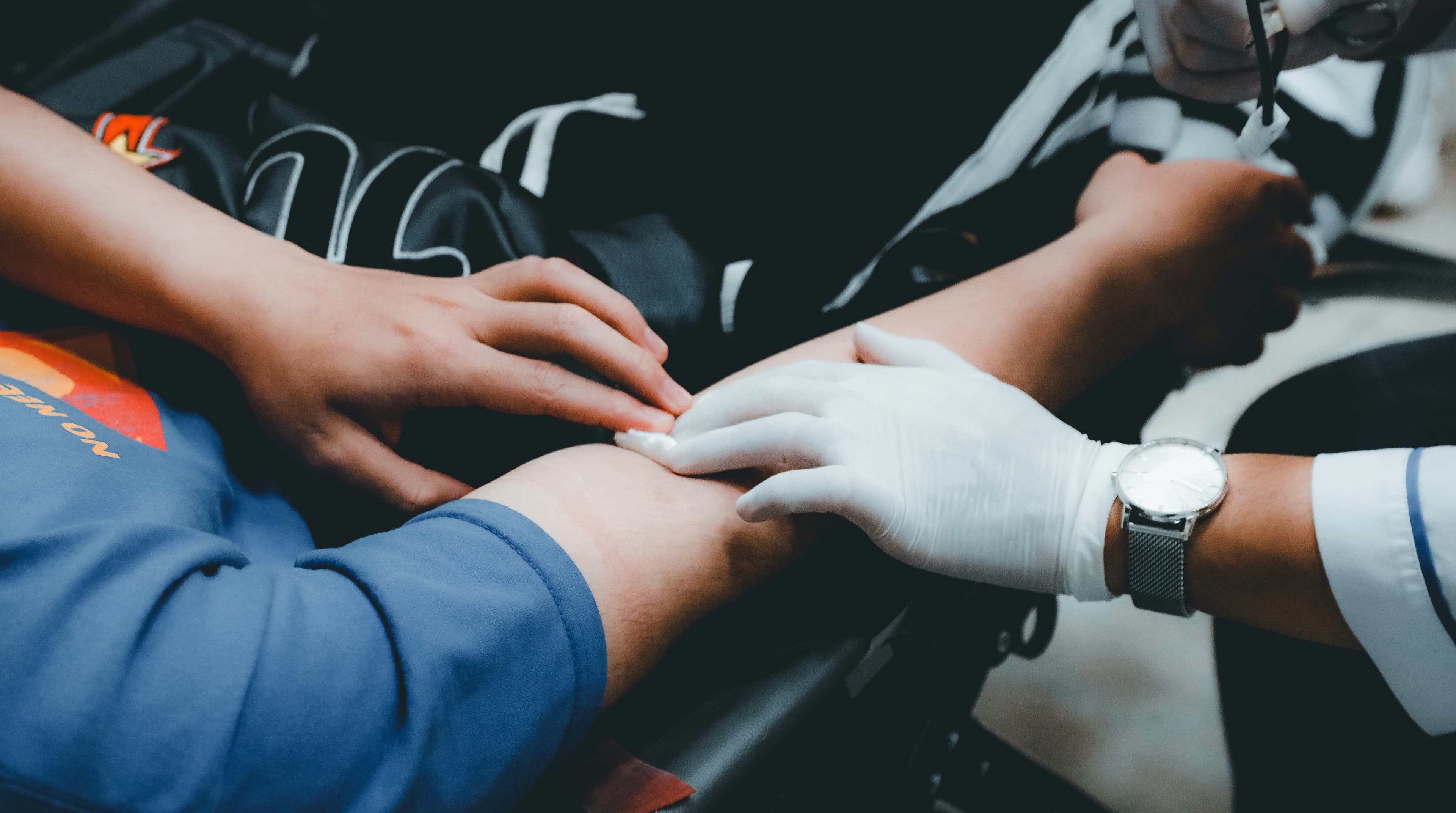
If you train hard, the blood tests worth knowing about cover your iron stores, your red blood cells, inflammation, your kidneys and your hormones. Hard training can move markers in all five, so when you test matters as much as what you test. Sports scientists suggest testing in the morning, rested and before eating, under the same conditions each time, then comparing each result with your own earlier ones .
Is low iron common in athletes?
Low iron is common in athletes, and hard exercise affects how much iron you absorb.
Iron deficiency is common in athletes, especially women and endurance athletes. A 2019 review put it at about 15 to 35% of female athletes in the groups studied, and about 5 to 11% of male athletes .
Researchers think one reason is hepcidin, the hormone that controls how much iron you absorb. Hard exercise raises it for a few hours. In a small trial of 12 endurance-trained men, it was raised 3 hours after running .
Ferritin is your iron savings account. UK guidance calls it the single most useful marker of iron deficiency anaemia . Your stores can run down before haemoglobin falls far enough to count as anaemia, and in endurance athletes low iron without anaemia is the more common of the two . So a normal haemoglobin may not mean your stores are full.
But ferritin rises with inflammation, so it can look normal even when you're short of iron . It can also be raised after exercise. That's why sports scientists recommend reading iron, total iron binding capacity (TIBC), transferrin saturation and ferritin together, with haemoglobin and your recent training in mind .
Why is my haemoglobin low?
Training expands the liquid part of the blood, which can make red cell results read lower.
If you train a lot, it can be the training itself, or it can be low iron. Haemoglobin is the part of your red blood cells that carries oxygen to your muscles . Training expands plasma, the liquid part of the blood, which dilutes the red cells. So endurance athletes often have a slightly lower haematocrit (the share of the blood made up of red cells), even though they have more red cells and haemoglobin in total than inactive people . This is sometimes called sports anaemia, but it isn't anaemia in the clinical sense .
After training, plasma volume rises quickly, so haematocrit can sit lower for several days . Low iron can also bring haemoglobin down, so it's read alongside your ferritin .
Does hard training raise CRP?
Inflammation markers can stay raised for days after a very hard session or race.
Yes, very hard endurance exercise can raise it. C-reactive protein (CRP) is made mainly by the liver and rises with infection or inflammation. The high sensitivity version, hs-CRP, measures lower levels .
In a Spanish study of 86 marathon runners, CRP stayed above its pre-race level for several days . There's no single threshold above which a rise after training means something is wrong. So sports scientists suggest judging inflammation markers against your own results, taken when you're rested and well .
Can exercise raise creatinine?
Creatinine can rise briefly after very hard exercise, and muscle and creatine affect it too.
It can, for a short time. Creatinine is a waste product made from creatine, which muscles use for energy . A small US study of 25 marathon runners found 40% had a rise in creatinine large enough to meet the definition of acute kidney injury. All their kidney markers were back to normal within 24 hours .
eGFR (estimated glomerular filtration rate) estimates how well your kidneys filter, and it's worked out from creatinine. NICE says to read it with caution in people with very high muscle mass, such as bodybuilders, because more muscle can make eGFR look lower than it really is .
Creatine supplements are linked to a small rise in blood creatinine. A 2025 review of 12 mostly small, short studies in mainly healthy people found no clear change in kidney filtration in the 5 that measured it .
Whatever the likely reason, a result on its own isn't a diagnosis, so a creatinine outside your lab's range is something to take to your GP.
What about hormones?
Testosterone changes through the day, and years of heavy endurance training can lower it in some men.
Testosterone is highest in the early morning, and British Society for Sexual Medicine guidance for men says to test between 7am and 11am, ideally fasting .
Researchers have described men who, after many years of heavy endurance training, have persistently lower resting testosterone. Current evidence suggests this isn't common .
Energy matters for women and men alike. Eating too little for the training you do can cause a range of health and performance problems in athletes, which the International Olympic Committee calls Relative Energy Deficiency in Sport (REDs) .
When should athletes test?
Test rested, in the morning and before eating, and keep the conditions the same each time.
Test when you're rested, not straight after a hard session. If your panel includes creatine kinase (CK), an enzyme that leaks from muscle into the blood, it typically peaks about 24 hours after muscle damaging exercise such as heavy strength training, and can stay raised for up to 7 days . For the Performance Blood Test, we ask you to avoid hard exercise for 48 hours beforehand.
Rest first
Test the day after a rest day, or after the same kind of training day each time .
Test in the morning
Give your sample before eating and before training .
Keep it the same
Same conditions each time, so you compare like with like .
Time it with training
Test at the start and end of major training blocks .
Build your baseline
Tests taken when fit, healthy and rested become your baseline .
Read this way, your results show where your iron stores sit and how each marker compares with your own baseline, not only with your lab's range. Every result is checked by our team before it's released.
Related test
Performance Blood Test
A sports performance blood test covering blood count, iron, liver and kidney function, thyroid, cholesterol, inflammation and hormones including total and fr…
Common questions
Quick answers to common questions from athletes.
Should I exercise before a blood test?
Avoid hard exercise for 48 hours before the Performance Blood Test, and leave longer after a race, as very hard exercise such as a marathon can keep CRP raised for days .
How often should athletes get blood tests?
Sports scientists suggest testing at the start and end of major training blocks, under the same conditions each time .
Why is my haemoglobin low if I train a lot?
Training expands the liquid part of the blood, which dilutes the red cells . Low iron can bring it down too, so it's read alongside ferritin .
Do all athletes need regular blood tests?
Women and endurance athletes have the most reason to check their iron, because iron deficiency is most common in those groups . Anyone in heavy training can use a rested test as a baseline .
Was this article helpful?
Know where you stand
Home finger-prick kits, nurse visits and clinic appointments, with your results explained.
Browse all tests
Daniel SnowWritten by · BSc (Hons), PGCE
This article is for general information only and is not medical advice. If you have symptoms or concerns, speak with a qualified clinician.